Search This Blog

Wednesday, August 24, 2011

Wild Child: Confession of a Reformed “Plaza Thug”


(Blogger’s note: the names in this post have been changed to protect the identities of my accomplices, particularly so their children don’t give them guff.)

Reading about the recent swift action to enact a curfew for tweens and teens on the Country Club Plaza made me have a flashback, to a time in my teens when I had a minor brush-up with Plaza Security. Due to “The Incident”, I missed my own parent-enacted curfew and felt compelled to explain my tardiness with a 1985 Oscar-worthy performance of “Why I Was Wronged by the Law.” The drama unfolded something like this:

(Ward and June were watching TV when I came in.)

“I know I’m late, but let me explain. We were hanging out at the Plaza just looking at music and I accidentally knocked over a display of cassettes and when I bent down to get them, I got knocked over, and the cop grabbed me by the shoulder and made me come with him to security to make sure I didn’t steal anything! Can you believe it?”

My father looked up from his news program. “Were you buying anything?”

“No, just looking.”

“Were you shopping?” my mother asked.

“No, just hanging out.”

“With whom?”

Moe, Larry, Curly and Shemp.”

“Did you steal anything?”

“NO! You don’t understand—we…”

He and my mother exchanged the dreaded ‘has our youngest child learned nothing from his 7 older siblings?’ look.

“I understand that you boys had no business loitering there.”

Loitering? What kind of thug did they think I was? Why were they not taking my side? But the parental academy had rendered their decision: case dismissed.

As a current daughter-protective dad and former bored teenager, I understand much better that tweens and teens are a frustratingly mixed-up bunch. Over dinner, I asked my high-school-freshman daughter what she thought of the curfew. “They’ll just do what they were doing on the Plaza someplace else, earlier.” She went on to say that if the pack of kids was all boys or mostly boys, maybe they felt like they had to be together to be safe. Thinking back to my own impetuous youth, I had to admit that we came to the Plaza to escape Raytown, even for a night. We didn’t have much money, but we had ample time, a Camaro with a half-tank of gas, and each other…to egg on each other. We weren’t thinking of causing trouble; we were not thinking, period.

So to the merchants of the Plaza who have endured years of knucklehead teen behavior, I am sorry. To the kids who feel like they can get away with anything if there are enough of them, you are wrong. And to the parents who assume their kids are doing what you assume they are doing, you may just be right… but probably not.


By Derek McCracken

Race Matters: Engaging All Men to End Violence against Women

In his book The Macho Paradox, violence prevention educator Jackson Katz states, “True and lasting change will require – at a minimum – a critical and multicultural mass of men emerging to partner with women in confronting men’s violence on both a personal and institutional level.”

What will it take to build a critical and multicultural mass of men who will partner with women to confront men’s violence? I believe there are many answers to this question including a very important one: Race Matters. For us to ever experience this reality, we must be willing to acknowledge and confront the racism that has permeated our history and particularly the characterization of sexual violence.

Since the beginning of the enslavement of Africans in America through Jim Crow segregation, African American men were painted as sexually aggressive predators that posed a serious threat to White women. This led to countless acts of terrorism by White America to murder African American men for the slightest suspicion, rumor, or for no reason at all. While lynch mobs were forming to conduct these acts of terrorism, White men were frequently known for pressuring African American women, who many times worked in domestic services with their families, into unwanted sex. There is no record of a White man during this historical period ever being prosecuted or lynched for these rapes.

While lynching no longer takes place in its historical form, the racist narrative that informed those terrorist acts is still subtly perpetuated in many facets of our dominant culture. Now it is not just relegated to African American men, but also includes other men of color and men with lower socioeconomic status. This must be challenged by stating the facts that sexual aggressive behavior is perpetrated by men of all races, classes, cultures, religions, and beyond. If a man is to become a good ally with women, it must be based on his willingness to challenge sexually aggressive attitudes and behaviors in himself and other men.

For all men to see the importance of partnering with women to end men’s violence, all women’s voices and experiences must be given equal respect and prominence. While the Women’s Movement throughout history has included all races and classes, the white middle-class narrative typically dominates. If we are asking men to realize that they need to be involved because someone they know and love (their sisters, mothers, daughters, lovers, etc) could be at risk, then all women need to be represented. Diverse representations of women must not be relegated to the stories shared, but must be realized at every level of the efforts to end violence against women, including those women providing the leadership in which men are engaged.

If the leadership of efforts to end violence against women reflects the diversity of men in our communities, then culturally inclusive strategies will be incorporated in time. This in turn can begin to build the “critical and multicultural mass of men” partnering with women in ending men’s violence against women.


By John Tramel


Thursday, August 18, 2011

Dads & Daughters


“Hey, are you ready to do our training?” I hollered to my daughter. For 5 years we had been developing a self-protection system for teen-aged girls and their dads. More than just a way for girls to protect themselves from threats, it is a way to connect dads and daughters in this typically awkward time. “Almost!” she hollered back in our usual exchange.

Traditional roles between dads and daughters seem tough these days. Cultural norms create distance and opposition between dads and daughters creating fear for and in our daughters. We don’t’ generally give our daughters the physical contact or the space they need that help them develop healthy relationships with boys. We know we need to send them out into the world, but fear they might get hurt.

My relationship with my daughter began when she was 3 months old in a town just north of Hanoi, Viet Nam. The adoption took about a year and the strong bond between us took about an instant. I stayed home and took care of her for the first two years of her life because it was what she needed. I stepped outside of the traditional male role for her. That’s pretty much how our relationship continued for the next 13 years. Certainly I am her protector, but more, I am her teacher so that she can protect herself. The result? I am excited for her to start dating and she remains connected to me.

From one father to another, I strongly encourage you to not be afraid to step out of traditional roles. Be the type of man that you would want your daughter to date; calm and loving as opposed to violent or controlling. Watch your language about women and girls, and demand that society treat your daughter with respect.


“So, what do you want to practice today?” I asked carefully waiting for the usual "I don’t care” or “Whatever dad”. Instead she said, “Can we go over the escape from the bear hug? That one is fun to practice.” For years I have been waiting for her to have fun with this training; to really connect with me and my passion for this training. “Sure. Remember, first to stay calm and breathe, and wait for the right moment to respond…”

Jim Doyle – Founder, Self-Protection.org

Wednesday, August 10, 2011

What Does It Mean To Be "A Man Of Strength"?

In the spring of 2010, MOCSA's Man Up! Program piloted Strength Clubs in the Kansas City area. Strength Clubs are modeled after Men Can Stop Rape's MOST Clubs and is a program that engages young men in preventing violence against women. The video below displays lessons learned this past year from local Strength Club members about what it means to be a man today, including what it means to be "a man of strength".


As you can see (or hear), one of the many lessons they learned was how to think on their feet and respond to introspective questions with distractions in the background. We won't put you on the spot like these guys, but we are interested to know what you think it means to be "a man of strength" in today's culture?


Wednesday, August 3, 2011

Feminism: What is its Role Today?


I once had an English professor who made his thoughts on feminism abundantly clear: “if you’re not a feminist, you’re an idiot,” or something to that effect was to be expected from him on an almost daily basis. Clearly, he was an outspoken yet entertaining professor. While he had a habit of ruffling more than a few feathers in class, he was usually right; his views were not only well articulated but also well supported. It is thanks to this professor that I became confident in identifying myself as a feminist. For me, the word “feminist” has evolved and transformed from the days of bra-burnings into a label for a movement that has perennial relevance. However, some of my peers (male and female alike) are uncomfortable in calling themselves feminists because of some of the radical connotations it may or may not have. I am interested in what the “f-word” means to the readers of this blog as well as the experiences that have led them to their perspectives.

As made clear in Jessica Valenti’s recent Washington Post article entitled “Slut Walks and the Future of Feminism,” the term “feminist” allows for a wide spectrum of meanings. While there is most certainly a place for relatively reserved feminists, recent years have seen a revival of the more extreme demonstration tactics reminiscent of the bra-burnings of the 1960’s. “Slut Walks” are an example of such demonstrations. As Valenti explains, the protests have been some of the most successful “feminist actions of the past 20 years” and “began after a police officer told students at Toronto’s York University in January that if women want to avoid rape, they shouldn’t dress like “sluts.’’ Participants have made efforts in over 75 cities (including Kansas City) to take back the term “slut” and to combat the notion that victims of rape and sexual assault are more often than not “asking for it” by dressing in a suggestive manner.

While I fully support the objectives of “slut walks” and similar demonstrations, I cannot help but think that these sorts of somewhat radical protest tactics have isolated some of the mainstream from identifying as feminists. I think that many males and females are weary of being labeled a feminist because they do not want to be perceived as some sort of outlier or fringe member of society. To me, feminism is a movement that has been fundamental to the advancement of not only women’s rights but also civil rights as a whole. It is important that modern day feminists embrace not only the activists in the streets (i.e. the participants of the “slut walks” across the country) but also individuals who truly believe in the ideals of the feminist movement whether they realize it or not.

So I ask, readers, what does feminism mean to you? Where does it fit in society today? What is the future of it? What relevance does it still have? I would argue that its relevance is enormous and that if we are going to continue to advance in terms of civil rights then we must maintain a population of feminists motivated enough to organize and participate in “slut walks” as well as those feminists inspired to make more low-profile impressions on those they are closest to.


By Ryan Derry

Wednesday, July 27, 2011

How Many Politicians Does It Take to Prevent a Sexual Indiscretion?


Thanks to Patrick for letting us cross-post this on our Blog. Please check out more of his work at http://mencanstoprape.blogspot.com

By Patrick McGann
Director of Strategy & Planning

I finished writing Part 5 of “How I Came to Work at Men Can Stop Rape” yesterday (the part where I actually finally end up at MCSR) but then this morning read the Washington Post and learned that Rep. David Wu (D-OR) is accused of having “aggressive and unwanted” sex with a teenage daughter of a friend. My reaction, said out loud at the kitchen table: “What is wrong with these guys?” It wasn’t directed at Abby, my wife, as much as it was an expression of exasperation. So, I’m delaying posting Part 5 for addressing political scandal.

Part of me still expects, I suppose, high standards of behavior from our public representatives. Idealistically, I assume they understand their need to uphold and represent our democratic principles, and that “sexual indiscretions” (media language) are not in line with those principles. In a more practical sense, surely they have already seen enough politicians fall from grace so that they are aware of the potential consequences to their own careers? When I went to Texas Tech we told Texas A & M jokes about how many Aggies it takes to screw in a light bulb. Although I can’t quite wrap my head around it right now, I’m thinking there’s a similar joke about how many politicians it takes to stop a sexual indiscretion.

Of course I know why these male politicians keep acting in inappropriate ways. Isn’t traditional masculinity the root cause for so many things we men do? And doesn’t it need a light shined on it in the hallways of our government buildings? It has been invisible for too long in our Capitol, I say! Not only do politicians suffer the consequences when one of their own creates a “Guys Gone Stupid” video, we as citizens lose any sense that the people in charge of our country are credible, responsible, and respectable adults.

Our politicians need help! They can’t prevent these indiscretions on their own or they would have already done so. I challenge them to bring in the masculinity and gender-based violence prevention experts.

Politicians, I beg you: ask not what masculinity can do for you, but what you can do to change masculinity.

* * *
Patrick McGann, Ph.D. has been involved with Men Can Stop Rape (MCSR) since the organization’s inception in 1997. As Director of Strategy and Planning, Patrick co-authored a sexual assault prevention strategy for the U.S. Department of Defense (DoD) in 2008 and oversaw the development of the HURTS ONE. AFFECTS ALL. public education campaign for DoD in 2010. He regularly gives presentations across the country on engaging men in the prevention of gender-based violence.

Wednesday, July 20, 2011

Speaking Up Part 2: In the Workplace

My last post (“Speaking Up: When, Where, Why?”) called attention to the issue of males calling out hostile males when surrounded only by other men. I mentioned a recent lunch I was having with a friend who had a few choice words regarding a female friend of mine when I decided to speak up. While I do feel confident in my actions regarding the incident with my friend, I realize that it was a conversation among friends and in private. However, I have recently been a part of several situations in which I have seen male-perpetrated harassment of women taking place in an entirely different setting: at work and among people I do not know very well.

My summer job involves a great deal of interaction with new students at the university I attend. My fellow undergraduate colleagues and I often find ourselves in situations in which we are working 1 on 1 with students. Recently, I and a few other members of my staff have noticed some elements of the behavior of James (not his real name) that we do not feel entirely comfortable with. James has a habit of working with three or four of the female students each day in a much greater capacity than with any other incoming student. Often, his behavior crosses the line: sharing seats with women that did not invite him to do so, giving certain female students massages (again, without being asked to do so), and persistently asking for numbers (and not resting until he gets at least what could be the phone number of whoever he is asking).

Personally, James’ behavior infuriates me. I have brought it up a few times with my peers and most have similar feelings. However, we never do anything about it. Admitting that I have done nothing to stop behavior that is clearly demeaning, inappropriate, and offensive makes me feel horrible. Only now do I realize how silly it is to let James’ actions persist. The students we work with daily are already in a stressful position: the start of their college careers. The last thing they need is an aggressor like James stressing them out even more. I would greatly appreciate knowing what you all would do if in a similar position. Is it best to confront James? To inform his supervisor? What have been your experiences with workplace aggression?

Ryan Derry

Wednesday, July 13, 2011

Flat Tires, Rape, and Why You Should Care


Recently, I was loading up the car for summer family vacation, and as I was checking my tires in preparation to hit the road, it reminded me of some unfortunate comments from a couple of months ago.


This is not going to be a blog post about partisan politics, religion or abortion - honest! No, it's a blog about the antiquated and harmful attitudes and insensitivities expressed recently by a member of the Kansas House of Representatives that perpetuate the idea that victims of sexual abuse are somehow responsible or to blame for what happens to them.


Last May, during a Kansas House discussion of a bill that will ban insurance companies from covering abortion insurance under general healthcare plans, Kansas State Representative Pete DeGraaf from Mulvane basically said women needed to "plan ahead" for being raped and possibly impregnated against their will; that being raped is like getting a flat tire. I remember thinking after hearing his comments, "Did he really just say that?!" You can read this report, in its entirety, from the Associated Press article posted on May 13, 2011.


Mr. DeGraaf, you are off base with these remarks and have demonstrated a complete lack of sensitivity to the violation and loss of dignity experienced by a victim of sexual assault. This point was well illustrated in the attached Venn Diagram showing some of the notable differences between having a flat tire and being raped: in one instance, you call AAA and have them replace the flat tire with your spare tire, and you are quickly on your way; however, in the other situation, you may have to face contracting HIV/STDs, an on-going and often overwhelming sense of shame and of violation, and/or unwanted pregnancy. I am not of the opinion that the two events have anything in common, and I am not willing to accept that rape is an eventuality of being a woman in today's society or that anyone should ever have to plan ahead to be raped.


I respectfully suggest that Mr. DeGraaf issue an apology to all the women and men of Kansas (and thanks to the internet, the rest of the Country), for his insensitive remarks. While these comments were prominent in the media a few months ago, they are no less relevant today and we need to continue to address the insensitivity behind them. There are several petition efforts currently underway (even one on Facebook), as well as a "send a tire" campaign, and of course, feel free to drop him a line at his office. Check out your options and act appropriately!

By Mike Eggleston

Wednesday, July 6, 2011

An Interesting (but not so fun) Thought Experiment

Can you imagine the first paragraph of this news article reporting this instead?:

Paula Nelson was at a Kansas City park with relatives Wednesday night when three young women walked over a grassy hill and opened fire without saying a word.”

While it is certainly in the realm of possibility that three young women would savagely murder another female in pubic, it is not the norm. And it comes as no surprise that we find young men committing acts of horrific violence. While I’m not advocating an increase in female violence (I’m guessing that is not what people mean when they speak of gender equality), I was taken aback by how shocked I was when I switched the sex of those involved in the story.

What does it say about men that violence is so normal, acceptable, and even encouraged among us? What are we doing do change this overwhelming problem? What are you doing about violence dominating masculinity?

Try switching the sexes in this story.

Tuesday, June 28, 2011

Men’s Body Wash: Liquid Masculinity in the Shower…or is it?

I remember when men’s body washes did not even exist. Men used to use bar soap (because they were “manly” men, and they did not want to smell “girly”).

Now, there are entire ad campaigns for men’s body washes that seek to make it socially acceptable and even desirable for men to use these products.


In another Dove commercial, they discuss “man-hide” and the toughness of men's skin in relation to cow hide or leather. What is interesting is Dove’s argument that its product is actually made to soften the man-hide. Does this mean that American culture has actually shifted so as to allow men to have moisturized, soft skin like their female counterparts? Perhaps, as long as there is there is first an allusion to the toughness of such hide… Are gender roles shifting gradually, or are they equally present but masked by effective marketing? Hmmm…

Old Spice, on the other hand, tells men to “be comfortable in your own skin”. Its commercials allude to one man’s “muscle body” and his “striking brown eyes” while a man in another ad encourages men to use Old Spice instead of lady-scented body washes. The marketing this company employs appears to also appeal to women to a certain degree. In placing attractive male models in their commercials, these companies are not only trying to appeal to men who use the products but to women who will (in the minds of the marketers) shop for the products and smell the products their partners use when they bathe. Are these men’s or women’s products?? Again, does it matter? It’s just soap…

I still remember the original Old Spice that my grandfather wore when I was younger, and I will never forget that smell…. I knew that I probably did not want to smell like that when I grew up, but he, my other grandfather, and my father encouraged my interest in body care and cologne. This connection we make with the male figures in our lives can result in our long-term commitment (or lack thereof) to body care and maintenance of our appearance and bodies.

It is fascinating that as we get older we often keep similar if not better hygiene routines that we learned from such figures in our lives. The focus on hygiene, however, becomes less of a connection with male figures in our lives but how appealing or masculine men are when they use such products.

What do you consider when you purchase masculine hygiene products (aka “soap”)?


Mark Halastik

Update: Sesame Street takes a jab at Old Spice with "Smell Like A Monster" and makes you think how ridiculous this approach to stereotyping men through hygiene products really is:

Wednesday, June 22, 2011

A Good Day for Sports and Masculinity


It is no secret that the professional sports world often portrays some of the worst of what it means to be a man in today’s world. Former and current athletes being accused and convicted of sexual violence, super star athletes celebrating their hubris on national television, and athletes using their money and power for sexual conquests, the examples are sadly easy to come by.

But how about this for a positive spin on today’s athletes?! While I know nothing about Rory McIlroy’s personal life, it seems that many in the sporting world have been drawn to the young man’s humility, poise, and character. After breaking several records, and dominating the U.S Open, it is his positive, humble personality making headlines. A prime example mentioned in the article is that following the Master’s Tournament, in which Mr. McIlroy fell short, some might say “choked”, he used his post-game interview to mention that it would help build his character rather than belittling sports fans.

I don’t know about you but this is was much needed breath of fresh air for both professional sports and masculinity.

Keith Bradley

Monday, June 13, 2011

Speaking Up: When, Where, Why?


Recently, I was at lunch with a good friend of mine. Let’s call this friend Jack. Jack and I were enjoying each other’s company and conversation until he brought up a girl we both know (we’ll call her Susie). Jack went on to describe how much he did not like Susie. “She’s cold,” he said, “honestly, I have never felt an ounce of warmth from Susie,” Jack went on. Now, I may not have gotten my feathers all ruffled if it wasn’t for the fact that I happen to like Susie! I told Jack that perhaps all his built up frustration with Susie is stemming from the fact that he doesn’t know her all that well. “I, on the other hand, have spent a lot of time with Susie,” I told him. “She really is pretty awesome,” I continued. “No man,” Jack said, “she’s cold, she’s a b****.”

And there’s the rub. I was perfectly respectful of Jack’s thoughts on Susie until the final above-mentioned comment of his. Sure, I thought his opinions were unwarranted. I had concluded that Jack just didn’t know her and that he just didn’t know what he was saying. However, that all changed when he employed the use of a single word: a word so derogatory, chauvinistic, and offensive that I simply could not listen to my good friend Jack any longer. I stopped him right in his tracks. I interrupted him and told him he had crossed the line. Jack looked confused, surprised at how irritated I had become. I explained to him that that word was exceptionally hateful and that he had no idea what he was talking about. Jack laughed it off and insisted he did not mean to be hateful. I believed him. In fact, I felt bad I had gotten so hostile towards him. I even apologized!

Now, as I reflect on my scuffle with Jack I only feel worse. I should have held my ground. I should have defended Susie with more passion. I definitely should not have apologized. So I ask, readers, am I analyzing this too closely? Was I out of line in confronting my good friend and perhaps, if the discussion was prolonged, putting our relationship in jeopardy? In a more general sense, what are your thoughts on speaking up? When is it appropriate and when is it best to just let it slide?


Ryan Derry

Tuesday, June 7, 2011

Trauma Informed Allies

I recently joined an agency whose mission relates to the stabilization, care and healing of kids in crisis. The agency’s culture and model of care revolves around an idea called trauma informed care. At the center of this model lives the realization that some kind of trauma happened to these kids. With this realization, we do not ask “What’s wrong with you?”, rather “What happened to you?”

As allies in the fight against sexual assault, we need to lead a similar paradigm shift when we support victims of sexual assault. Just accepting and understanding that a trauma has occurred and taking this view to our communities would be a good first step. But then a trauma informed model pushes us to accept that we must help stabilize, care for, and heal victims - without judgment. Some (perhaps not readers of this blog post) have a difficult time with the “without judgment” part of the trauma informed model. How do we lead this paradigm shift in our community?

The idea of Historical Contingency (future events are caused by a unique past) can inform our interaction and relationship with victims of sexual assault and bring the same to the larger community. If we can agree that events share a cause and effect structure then we can view a sexual assault as an event caused by other specific events in a certain context. This cause and effect structure is actually at the root of victim blaming so prevalent in our culture. But, this cause and effect structure can also be at the root of our counter argument if framed by the ideas of Historical Contingency.

We have all heard the insane chorus; “if she was not wearing this or that”, “if she would have not been drinking, or if she had planned ahead the attack would not have happened”. Historical Contingency asks, “How do you know?” How do you know what would or would not have caused the attack to happen? How do you know if it was what she was wearing, or where she was, or what plan she had would have changed the outcome? How do you know?

Historical Contingency makes a distinction between events with necessary causes and events with contingent causes. Put another way, for the outcome that did happen, could only one thing cause it or could many causes still have resulted in the same outcome? Were the events that lead up to the attack necessary (could the causes have not lead to any other outcome) or were the events contingent (could many causes have still lead to the same outcome)?

If the causes were necessary or contingent, it does not matter. No matter what the circumstances are or how many times we run through a scenario the only person that is responsible for sexual assault is the offender. The victim is never at fault no matter what she/he does. And all that matters is that the trauma occurred and forever impacts the victim. The critical point; the necessary cause of a sexual assault is always the attacker. The surrounding circumstances, the other causes, should not be part of our conversation.


Jim Doyle – Founder, Self-Protection.org

Wednesday, June 1, 2011

“When I Learned that Bullets were Frozen Tears”

Eve Ensler (activist, author, and playwright most known for The Vagina Monologues) used the above title for a chapter in her book Insecure at Last. Since the first time I read this chapter I have been moved by the accuracy of her description of one part of the complexity of violence, particularly men’s violence in our world. I call it emotional amputation, and it's what a lot of us experience as boys who are taught to sever ties with any emotion outside of anger and rage. Our training takes place about the time we learn to walk and is instructed by any number of nurturers in our lives. We get this lesson on playgrounds, in backyards, locker rooms, on the ball field, in the band hall, the classroom, and various other common spaces that boys find themselves throughout childhood and adolescence. It sounds a bit like this:

“Get up! You ain’t hurt.”
“Quit crying or I’m going to give you something to cry about.”
“Suck it up!”
“If someone hurts you, you hurt them back!”
“Never back down!”
“Win at all costs!”

And the list goes on….

Ensler talks about two types of power in the aforementioned chapter, a power that comes from feeling and adequately processing emotions, and a power that comes with denying and suppressing emotions. She says:

"There is a power that comes out of surrendering to grief and a power that results in refusing it. I think they are two different types of power. The one that emerges through allowing grief feels clean, purged, and inclusive. You have experienced pain and grief so you would not want to inflict it on someone else. The kind of power that emerges through the denial of grief is aggressive power. It is trying to conquer something, annihilate something, and over come something. It emerges out of fear and a need to protect oneself from feeling, which then becomes a country, a people, etc. It is inauthentic power. It is not shamanic; one has not passed through something in order to arrive there. It is manufactured power in order to manipulate, bully or deny.”

In the midst of this tragic reality there is good news. We can choose to reclaim our full emotional lives and as Ensler describes above, surrender to moving through our hurts in ways that don't harm others but instead heal us and others. If more men would open themselves up to the full range of emotions, and process and express them in respectful ways, the world would be a much safer place. And if more men and women would stop emotionally amputating young boys and instead nurture them to experience, process, and respectfully express all emotions, the world could be transformed…because all at once the power to heal would replace the need for the power to harm.

John Tramel

Tuesday, May 24, 2011

Join us for Kansas Dad's Summit: Saturday June 4th 10am-2pm

Sponsored by: Healthy Families of Johnson and Wyandotte Counties

Saturday, June 4th 10a.m.- 2p.m. Cabela's 10300 Cabela's Drive, Kansas City, Kansas in Legends Shopping Center

Featured speakers: "Coaching Boys Into Men" Brian Porch & Andre Tyler former Tampa Bay Buccaneer
-AND- "Man Up!" David Belt, with MOCSA

For Dads Attending this Free Event: Free Gift Card, Door Prizes, and BBQ Lunch Provided

Pre-registration required by June 2nd: Call Terri at 913-371-2220ext1254 OR Patty at 913-621-2016ext1205.

Organized by: Kansas Children's Service League and Circle of Parents

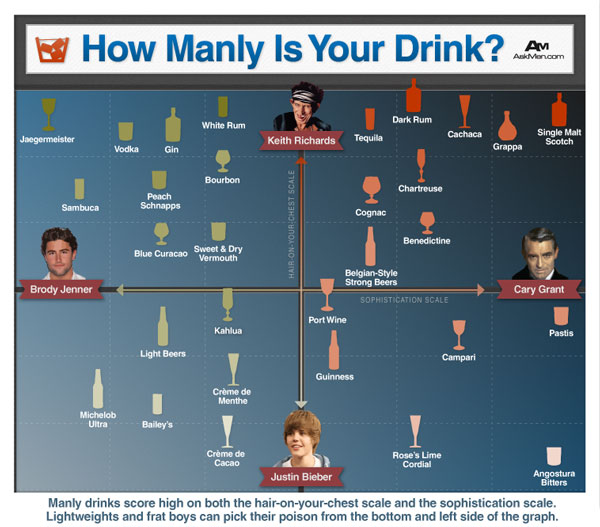
“What’s in Your Cup?”: Masculinity in Drink Form

Have you ever lost your “man card”?


Apparently I did and didn’t even realize it….

As many of you probably know, men strive to be “real men” via a variety of behaviors. This results from years of conditioning of them as boys and men by a variety of sources. Of course, this is not true of all circumstances but is an idea that appears to be prevalent among many groups of individuals. Men and boys who deviate from normal masculinity are considered to be societal deviants, to be abnormal or weird, and are still (even in 2011) often considered to be gay or “effeminate”. This relates to the “man card” in a sense that “losing it” is the equivalent to being gay or to being abnormal. This appears to be true of bar culture specifically, with which I have quite a bit of experience given I am employed by a restaurant/bar.

When I order a drink at a bar or restaurant, I generally don’t decide what I want based on what is “manly” but on what sounds good. One time, I ordered a cosmopolitan at a bar. An acquaintance of mine was nearby (though not really hanging out with me), and interjected, “Those pink drinks are for b-----s. Why the hell would you order that s---, man?” I was appalled, as I would not have thought he would talk to me like that, nor did I see a problem with the drink I chose.

Another time, I ordered a dirty martini, for which I was chastised by a coworker. He poked fun at my “marteenee” and continued to drink his beer. In a sense, he implied it was a delicate, light drink for wimps. Unfortunately, this type of commentary is common in the bar context, and continues to be present when men do not interrogate the social norms that dictate what beverages they “should” order. This is true of their behavior as well, as they should be willing to contradict social expectations of normativity but are often unable to do so due to peer pressure.


On askmen.com, there is currently a list of the “Top 10 manly summer drinks”. The caption reads, “You’re a man, so sipping on a drink that’s garnished with an umbrella or a small tropical forest is not an option.” What does that mean? How does a drink with a miniature paper umbrella connote femininity?!? Furthermore, why does it matter? When we have expectations of men to behave in certain ways, we tell them that other behaviors are wrong or inappropriate. This causes them to view such behaviors as weak and less than equal to their own.

In regards to the list of drinks, what about them is “manly”? Sure, there are “strong drinks” including whiskey sour and Moscow Mule. Among them, though, is the vodka martini. Perhaps the culture allows drinks of this sort to be considered “manly” once an “expert” like askmen.com claims they are.

At present, who decides that such behaviors (and drinks) are manly? The answer: We do! “Snips and snails and puppy dog tails” and “Boys will be boys” are two common expressions that relate to gender, with the latter being more relevant to this post. Why do we as a society consistently adhere to the ideals that gender is a “natural” concept? Likewise, why do we not allow individuals to deviate from such “natural” behaviors? I'm still not sure. Maybe because it is just easier that way.

So, if I order a martini, does that make me lose my man card? I don’t think so—James Bond drinks martinis, and is in some ways the epitome of masculinity. And yes, I consistently prefer mine shaken, not stirred.


Mark Halastik

Wednesday, May 11, 2011

Reality Check: The Power of Language

If you were the star of your own reality show, how would your character tell its story? Cinéma vérité is a style of documentary film making that blends reality with staged set-ups for maximum effect. It was the predecessor of today’s reality television genre. Provocative language is common, even encouraged. It escalates conflict, which heightens drama, which trounces Matlock reruns any day. But cinéma vérité does not have a lock on the power of language.

Rewind: “Dad, you made that Grace your bitch.” On its own, that quote from Talladega Nights (a Will Ferrell comedy) may seem like a harmless “kids say the darnedest things” candidate. I used to quote it, as an obtuse compliment to friends when they accomplished something particularly challenging: finishing a tough home improvement project, winning a weekend softball game, beating the IRS etc. I considered it a harmless “guy thing” -- only now I know it is not harmless and may – singularly or as part of a cumulative effect – be quite harmful. How?

Fast forward: MOCSA volunteer training 2011. The Man Up facilitators walked us through a “how bad is it?” analysis exercise where we considered various phrases or actions and ranked them low-to-high in context of how damaging we perceived them to be to women. Initially, I would have ranked the movie quote low. It’s a quote! From a comedy! Said by child actor! Our group’s discussion, though, led me down a different path: the casualization of derogatory language is just one way that men ( and society in general) can demean or degrade women, even unintentionally.

Pause: Having grown up with three sisters and plenty of female friends, I do not consider myself abusive or even chauvinistic. So how does a sensitive (I work at Hallmark for crown’s sake!) guy like me get his foundation shaken? Fatherhood. Now when I listen to the radio, watch TV, read books and blogs and interact with others, I do so with a keen ear toward defamatory words: alone or as part of a social cycle of verbal degradation. My slow evolution from “tool” to a more thoughtful dad and citizen has been a timely and necessary change. Fatherhood, and working at a company with a strong female leadership presence will do that to a guy. And I’m grateful. And I’m beginning to realize more and more the true power of language, beyond that which is just sexist. ANYTHING that minimizes another person is not OK. Here are a few observations; I encourage you to reflect on your own, too:

1) Sarcasm has a weak exchange rate in the emotional economy. I used to love the stuff, tossing out barbs here and there to keep the conversation going, interesting, stimulating…at least to me. Now I have my own live-in reality check, my daughter, who is a mirror and a megaphone. When I grimace, she grimaces. If I ask her, “Did you CLEAN your room?” I can pretty much expect a “Yes, I CLEANED it.” Touche!

2) Ke$ha kannot be kontained. I’ve tried changing the radio station, downplaying her relevance to contemporary society, explained the difference between creative and trashy…and yet “…brush my teeth with a bottle of Jack” seems to seep its way into our car radio play. Teaching moment: I asked my daughter if she knew what that lyric meant; she said she did not. I explained that Jack is short for Jack Daniels, and brushing your teeth with it makes no sense, and “I got it, Dad” was served up swiftly.

3) Overhearing doesn’t justify over-reacting. I’m all about diversity, and don’t shy away from a range of cultural events ranging from the downtown symphony to Santa Caligon Days in Independence, from tuxedo dinners to Taco Bell. With my family as company, we hear a lot that is not meant for the common ear, and often its an interchange between males about female passers-by. My shoulders tense when I hear a wolf-whistle being directed toward a woman, or my all-time-most-degrading-least-favorite overheard comment: “I’d like to tap that.” SERIOUSLY?!? Do guys (or any human being) think it’s OK to use that language? Dreadful.

4) Repetition risks affirmation. The Talladega Nights movie quote is an example; I used to repeat it so often that the word “bitch” lost its meaning. But taken to its truest, earliest meaning – am I OK with anything being compared to a female dog? No I am not, and by NOT repeating that language – as well as addressing (in safe environments) those who do, I can help stop the cycle of verbal abuse. Whether it’s said to a woman or not is immaterial; that which is said ABOUT women is just as offensive.

5) It’s OK to substitute, with creativity. Instead of saying “bitch and moan” I can use the word “complain.” Instead of quoting that line from Talladega nights, I can offer up a heartfelt but demonstrative high-five accompanied by a “YESSSSSS!”

Play:
For one week, take the language challenge. Be aware of what you say, read, hear or observe; how rampant is sexist/derogatory language in your social/work circle? Are you part of the problem? Have you perpetuated sexist language unintentionally? If you answer “Ye$” to any of these questions, you have room for improvement. And on behalf of MOCSA’s Man Up movement and dads and daughters everywhere, I hope you’ll use the power of language for good. Trust me. It’s a lot better than my mom’s method: dirty mouth = bar of soap.

Derek McCracken

Monday, May 9, 2011

Should Colleges Ban Fraternities?


The New York Times website hosts a rather interesting op-ed page titled “Room for Debate.” Every so often they pose a timely, thought provoking, controversial question to a host of panelists that have some sort of firsthand knowledge directly pertaining to the issue at hand. The most recent such question was whether or not colleges should ban fraternities. The issue is then supplemented by an acknowledgement of recent studies that have shown that fraternity members tend to both abuse alcohol and behave inappropriately towards women more so than their non-Greek peers.

While the question of whether or not banning fraternities from American campuses would have any real effect in cutting down on alcohol abuse and incidents of sexual violence elicited a whole host of insightful responses, the two most interesting were those of Nicholas Syrett and Charles Eberly, both professors at major public universities. Syrett of the Univeristy of Northern Colorado, puts forth an argument of which the crux is that universities are ultimately responsible for the negative actions of the fraternities they host and that when it comes to the chicken or egg-reminiscent question of whether misogyny among college men is brought on by fraternities or if fraternities simply attract already misogynistic men, he believes that both are true. However, Syrett also believes that while people will naturally join groups whose ideals and agendas equate to their own, that the situation is compounded and exaggerated as “fraternities pressure men to change in order to earn membership and status with them.” Needless to say, Nicholas Syrett is clearly a proponent of eliminating fraternities from college campuses.

On the other side of the fence rests Charles Eberly, a professor and faculty advisor to a fraternity at Eastern Illinois Univeristy. Eberly writes that fraternities are “unfairly singled out” when it comes to sexual aggression and other lewd behaviors. Eberly goes on to mention the incredibly positive efforts of some of the fraternity members he advises in terms of community service and civic engagement. He mentions three brothers he personally knows and the admirable accomplishments they have all made: one spearheaded the development of a healthy men’s program that is presented to every incoming pledge class, one created a charity for children’s advocacy programs, and yet another brother is in the process of running 50 marathons in 50 states to raise awareness for suicide prevention. Eberly goes on to write that fraternities only attract media attention when something goes wrong, yet hardly ever when things go right, an occurrence which he believes to be more common than the opposite.

As a college student myself, I feel that I too have at least a bit of expertise on the subject debated so fiercely. While Syrett and Eberly make some excellent points, they are both too absolute in their arguments. I am not here to come to the defense of fraternities nor am I here to call for their complete elimination. I have never been a part of a fraternity myself but have known countless students who are. My firsthand experience with fraternity brothers has led me to a notion that I am totally confident in: it is impossible to generalize an entire extracurricular activity that hosts literally thousands of men at my university alone.

That being said, it is also important to note that fraternities and their members have been responsible for some extremely disturbing, disgusting, and entirely misogynistic behaviors that in no way should ever be condoned by a public university. Extreme alcohol abuse happens. The objectification of women happens. Moreover, I am absolutely certain that sexual violence brought on by men and perpetrated against women happens as well, all within the boundaries of college fraternities. While chapters are often responsible for some rather amazing programs and initiatives, they are also culpable for some rather unsettling happenings.

All this is too say that the expulsion of fraternities from campuses will do little if anything at all to combat the bigger problem: sexual violence against women. While I wholeheartedly agree with the notion that the hyper-masculine environment of American fraternities does nothing to challenge negative behavior towards women, I also believe that their elimination will only force the worst members of Greek life to seek outlets in other forums. As an RA at one of the largest residence halls on campus, I work directly and daily with college men; I can assure you that it’s not just the frat boys who are guilty of taking advantage of women.

While there is simply no easy answer to the problem of sexual violence that most of our universities are facing, I believe that a good starting point would be young men stepping up and facilitating some conversations confronting our age group’s ideas of masculinity. To be frank, these sorts of conversations just haven’t been happening. While there are certainly some violent fringe members of society that happen to be in fraternities, there are also a great deal of more or less rational fraternity members that would not have made some of the mistakes they have in terms of sexual aggression if they were not pressured into doing so by their “brothers.” When it comes down to it, the voices of responsible college men have simply not been as prominent as the voices of the aggressors. If we want to start making some progress, we need to start making some noise.

Ryan Derry

Tuesday, May 3, 2011

Introducing Our New Volunteer Writers

Dear Readers,

You may have noticed that we are posting more frequently and have some new names tagged on our by lines. We wanted to let you know that we have invited six male volunteers to help bolster our efforts in developing thought- provoking and action- producing blog entries. We would like to take a moment to properly introduce them to you and thank them for their time. We are very excited about their participation in this project and hopeful that they can help generate further discussions as well as deepen awareness to the issues of sexual violence and men's role as part of the solution. If you have interest in volunteering in this way please contact us at our parent site MOCSA.org.

* Ryan Derry is a junior at the University of Kansas pursuing a degree in English with a minor in Political Science. Ryan has been volunteering with MOCSA over the past two years helping with Strength Clubs at Cristo Rey High School. Ryan became involved with MOCSA out of respect for the organizations mission, desire to work with young men, and interest in public service.

*Jim Doyle is currently Director of Business Operations at Marillac Children’s Psychiatric Hospital. He founded Self-Protection.org in 2009 to help empower individuals to protect themselves from threats, connect these individuals to others, and to help create safer communities. The mission and vision of Self-Protection.org dramatically state that everyone has the right NOT to be a victim, and that everyone can take simple actions to keep themselves safer. Jim is proud to volunteer with the Man Up! program at MOCSA to bring needed attention to what men and boys can and should do to stop sexual violence.

* Mike Eggleston and his wife have lived in the Kansas City area for almost 30 years, and have two daughters. A graduate of the University of Kansas School of Law, Mike has worked for Yellow Freight (now YRC), Ferrellgas, and currently Burr & Temkin, a commercial real estate firm, as their Vice President - Business Manager. Mike became involved with MOCSA in the Spring of 2010, following attendance at a Community Luncheon. He has gone through the Volunteer Training course and has taken part in several Man-up! workshops and various other events and activities. As a husband, a father, and a son, he recognizes now more than ever the critical importance of MOCSA’s mission!

* Mark Halastik is currently a graduate student in the Social Work (MSW) program at University of Missouri, Kansas City. His interest in volunteering with MOCSA coincides with 1) research interests in gender, sexuality, women's and men's studies; 2) advocating for violence prevention; and 3) commitment to education and outreach regarding violence and sexual assault. In May 2011, Mark will begin an internship with Planned Parenthood of Kansas and Mid-Missouri. In August, he will work as an intern at the Women's Center at UMKC. He hopes to continue to foster strong relationships between MOCSA and the various programs at the Women's Center and potentially with Planned Parenthood. Upon completion of the MSW program in the spring of 2012, he plans to pursue a career in macro-level social work.

* Derek McCracken has been volunteering with MOCSA since 1996, the same year he started working at Hallmark Cards as a greeting card editor. Some of his volunteer roles have included co-facilitating a co-ed survivors' discussion group, serving on the speakers' bureau, helping out with various SURE special events, and facilitating the male survivors' discussion group. He's still at Hallmark, working as a Creative Director and diversity advocate. He is glad to be part of the MOCSA volunteer team.

* John Tramel has worked for several years with organizations dedicated to addressing social justice issues related to race, gender, socio-economics, and sexuality. Before moving to Kansas City two years ago, John worked with Men Stopping Violence in Atlanta, GA as a trainer and program coordinator engaging and educating men to join the work of ending violence against women.

Thanks and please feel free to comment on any of their great posts!

MOCSA Staff


Why should all men be involved?


I remember the scene like it happened yesterday. A group of approximately fifteen middle-school boys were bantering each other in the front yard of a classmate’s house as the party began. Out of nowhere came two well-respected high school males confidently strolling towards the group of younger boys. As they approached, the young guys in the yard, of which I was a part, froze and gazed towards them with a sense of pride and delight in the fact that these older males would join the party.

The two teenage guys wasted no time in getting to the point, “Where’s all the girls?” With nervous smiles and laughter, each of us said in a jumbled chorus, “In the house…waiting for us!” Then they raised the question and moment of reckoning, “Who’s gonna get some?!” We all paused, not real sure what “getting some” meant, but sure that if these older guys thought we should, we better all resound an assured, “Yea… I am!” They laughed and followed with, “Ya’ll better!” and headed on their way. Here we were a group of middle school boys fifteen or so strong, on a mission to “get some” as we ventured in the house to join the girls.

As you can imagine, the goal for us was clear, emulating and impressing our older and wiser “heroes” by compelling the girls to engage in sexual activities. The environment was established. Our encounters, however they would end up, were not about a mutually desired intimate connection, but about girls being a means to the end goal of older male approval. This extremely dangerous atmosphere that encompassed the young girls that evening is dreadfully common at social gatherings all across America.

This common danger is one reason all men should be involved. All men are implicitly and/or explicitly educated and given tools to be sexually aggressive.

What do I mean by that? (I can imagine that this idea could be a little alarming). Do I believe that all men act in sexually aggressive ways? No. Do I believe all men have the education, tools, and ability to make sexually aggressive choices? Yes.

I will make sense of this by explaining the way Men Stopping Violence, an Atlanta-based social change organization dedicating to ending men’s violence against women, defines male sexual violence. Male sexual violence is male expectation of sexual acts combined with tactics to compel submission.


Here are some of the expectations that countless men have described from their own experiences:

Men should have lots of sex
Men should have access to sex on demand
Sex should be a trade-off for dinner, nice evening, etc.
Women’s bodies are available for men’s gratification
There is a point-of-no-return during sexual encounters


All men get these messages and ascribe to them in various degrees. Many men are very uncomfortable with these messages, but don’t know what to do with these feelings. Some men loyally follow these expectations and use tactics to fulfill them in relationships with women.

Some of the tactics are:

Name calling and whistling
Looks and gestures
Coercion
Emotional and psychological manipulation
Sulking and guilt
Drugs and/or alcohol
Physical manipulation and/or aggression
Isolation
Threats

When we combine the expectation with the tactics, sexual violence occurs. As I mentioned many men are very uncomfortable with the expectations and the tactics and never choose to internalize or act on them, but they also don’t challenge them in other men. Society normalizes this equation and in many ways makes a case for its acceptability.

Because of this reality, men need to hear from each other that this is not acceptable, it’s not part of the game, and it is not normal or natural. Men need not only to find this uncomfortable but despicable and intolerable. This is a lie that destroys the lives of women and children in our lives and communities and dehumanizes men.

For this reason, all men should be involved because there is no possibility for neutrality. If we as men are not challenging this belief system, we allow it to be perpetuated through the many messengers delivering it.

Working to change the messages men are getting will take the majority of men speaking a new narrative. If more voices are not raised in contradiction to the sexually aggressive narrative explained above, then more and more young men will adopt and adhere to it.

I talk to men all the time that say, “I would never sexually assault, rape, or violate a woman and your request doesn’t apply to me.” I then respond with something a college professor once said, “Once you are aware of the problem, you cannot be neutral, you are either part of the solution or you’re part of the problem.”

Men shouldn’t join the efforts to end men’s violence against women for charitable reasons, because of special talents, or to become heroes. We should join because it is our, all of our, responsibility.

In Letters from a Birmingham Jail, Dr. King is responding to white clergy’s critique of his direct action against racism. In their critique, they said that, if Dr. King and the SCLC would have given the new Mayor of Birmingham time, changes would have been made. Dr. King responded, “Time itself is neutral, it can be used constructively or destructively. More and more I feel that the people of ill-will have used time much more effectively than have the people of good will. We will have to repent in this generation not merely for the hateful words and actions of bad people but for the appalling silence of the good people.”

Men’s silence will only allow more perpetrations against women and children by men who continue to operate from the sexually aggressive narrative that powerfully instructs beliefs, attitudes and behaviors. We know that most men would not want that to happen to someone they love. Therefore, it is in men’s self-interest to be part of the solution because we all have women and children in our lives for whom we deeply love and care.

Most men can identify women in their lives that they would never want to see suffer the unimaginable horror of sexual violence. If men can begin to empathize by considering how they themselves would be affected by knowing a women they care for has been violated, maybe they could get to a place where they would not want to imagine any women going through this nightmare.

Not all men will be directly impacted by sexual violence, but as long as any woman is in danger, all women are in danger, including the women men know and love. Our mothers, sister, daughters, cousins, friends, co-workers, and lovers will never be truly safe until all women are safe.

John Tramel, friend of MOCSA and formally of Men Stopping Violence